March 13, 2026
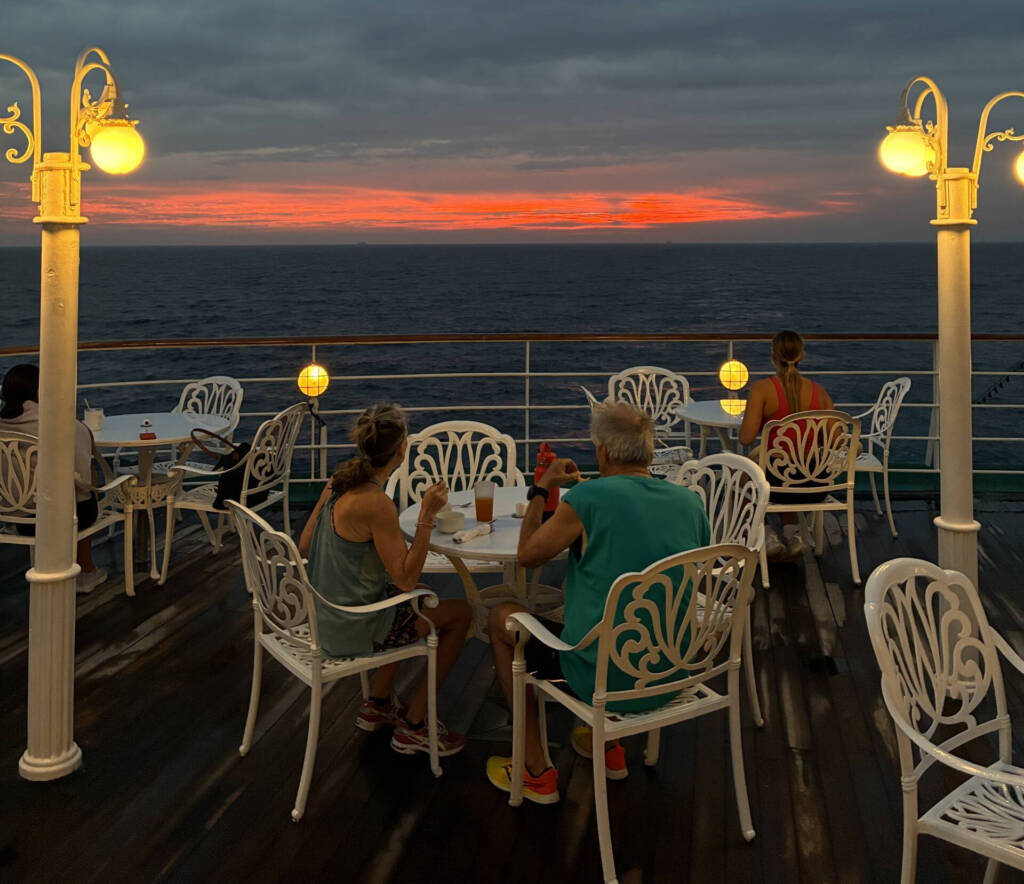
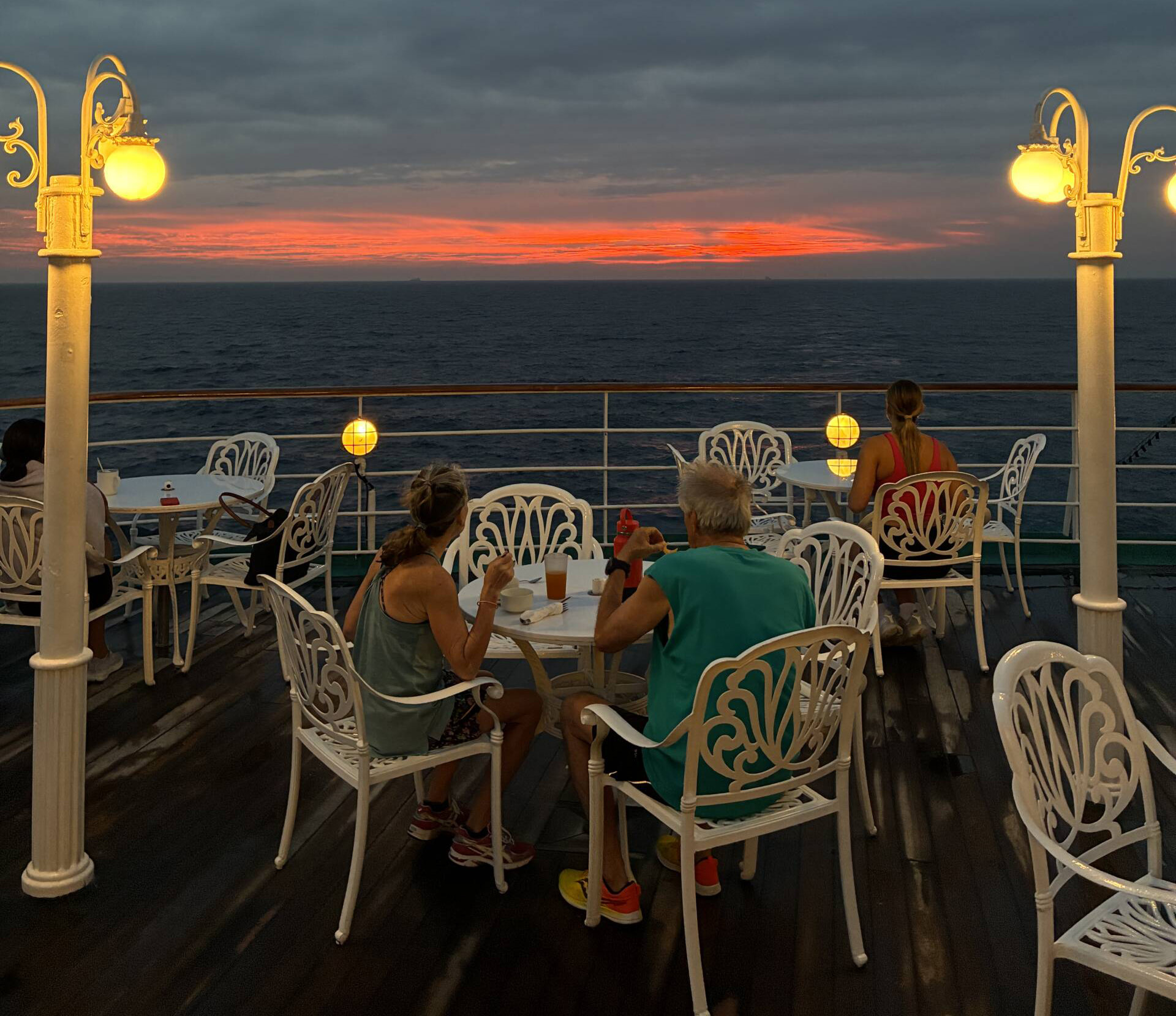
Here, in the middle of the ocean, borders have disappeared, and the only geography that truly matters is which deck your cabin is on. Life on the ship is measured by the meals you eat together, sunsets watched from the same railing, and conversations that keep going long after the ship’s lights dim.
Now, just a month into my journey aboard the MV World Odyssey, I have realized a shocking truth. I have formed deeper bonds with the people on this ship in just these few weeks than I did in nearly three years on land at my home institution.
At first, that realization was hard to believe. On land, we are constantly surrounded by people (our classmates, friends, coworkers) but often our attention is elsewhere. Our phones vibrate, and our attention is quickly stripped away. We are connected to the people around us, yet emotionally distant. Life onboard has disrupted that pattern entirely.
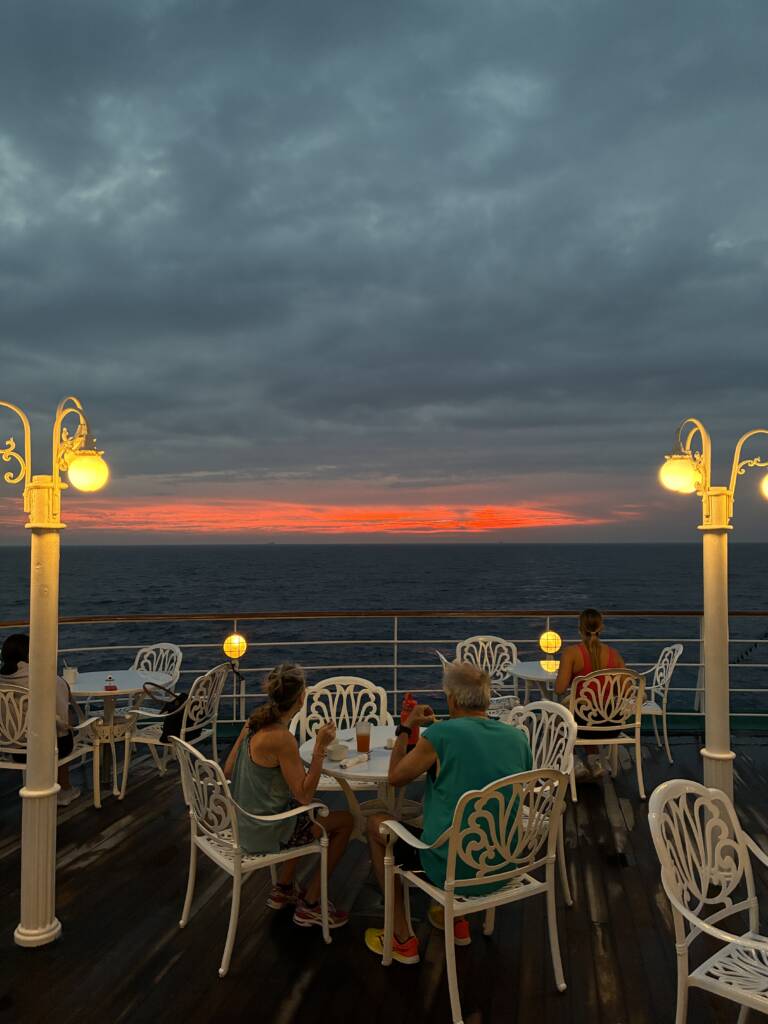
As a Sociology major at the University of Michigan, I have spent years studying how societies and relationships develop, as well as how communities sustain themselves. Yet it was not until I boarded the ship – into a floating world deprived of constant Internet access – that I truly began living those theories. Being unplugged forces presence. Without a screen to hide behind, we look up, and we make eye contact. We don’t just hear. We truly listen.
Here, conversations do not feel rushed, or half-heard; instead, they unfold slowly and are often sparked by something as simple as sitting next to someone on Lido Deck for sunset. It is in these special moments that I have realized people open up, and their stories surface; where vulnerability feels natural rather than risky.
One student puts it perfectly: “My world used to be in my phone. Now, this [the ship] is where my world is,” said Ben Anderson. His words capture what many of us are experiencing. The ship has become more than just transportation. It has become a living, breathing community filled with curious people who are wholeheartedly wanting to understand each other.
Another voyager, Elle Bowman, shared how being disconnected has affected her mental health, “My anxiety is so much better ever since getting on the ship and being unplugged.” Without a phone’s constant notifications or the pressure to stay digitally present, there is finally room to breathe, reflect, and be oneself.
What strikes me most is how quickly and naturally this community formed. People from different countries, cultures, and backgrounds have gathered with one shared goal in mind: to see the world. Without knowing it, we have formed something even deeper, a connection within each other. Without our usual distractions, we are regaining something deeply human – the experience of being truly known.
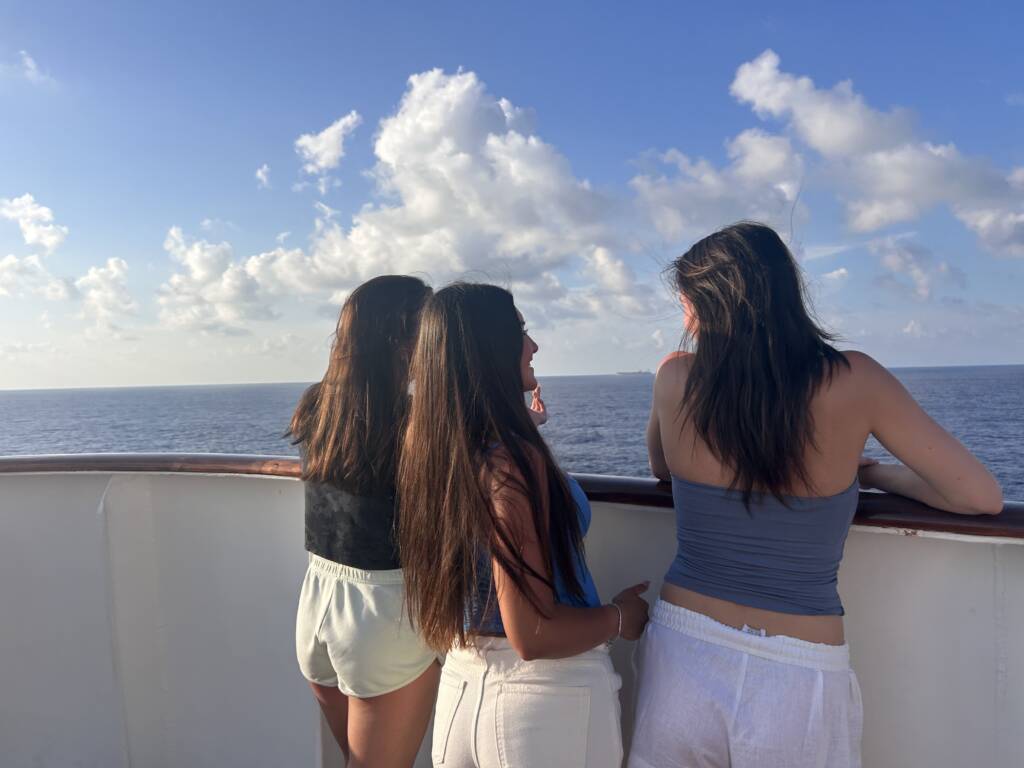
Living in this “in-between” state has taught the lesson that everyone carries a unique, heavy, and beautiful story. You just have to be “unplugged” long enough to hear it. Out in the open ocean, the world feels smaller and more meaningful. I’ve now learned that when borders fade and Wi-Fi disappears, community doesn’t require permanence. Sometimes, all it takes is presence.
Back home, trapped in our own bubbles, it’s easy to surround ourselves with like-minded people who reinforce what we already believe. Here, that comfort disappears. On this ship, people of opposite backgrounds and cultures are forced into intimacy; where differences become unavoidable and often the most important. I’ve come to believe that we learn just as much from the people around us as we do from our classes, and nowhere is that more true than on Semester at Sea.
So, step away from the screen, look up, and truly be present; because the deeper connections you’ve been missing are waiting for you to redirect your attention.
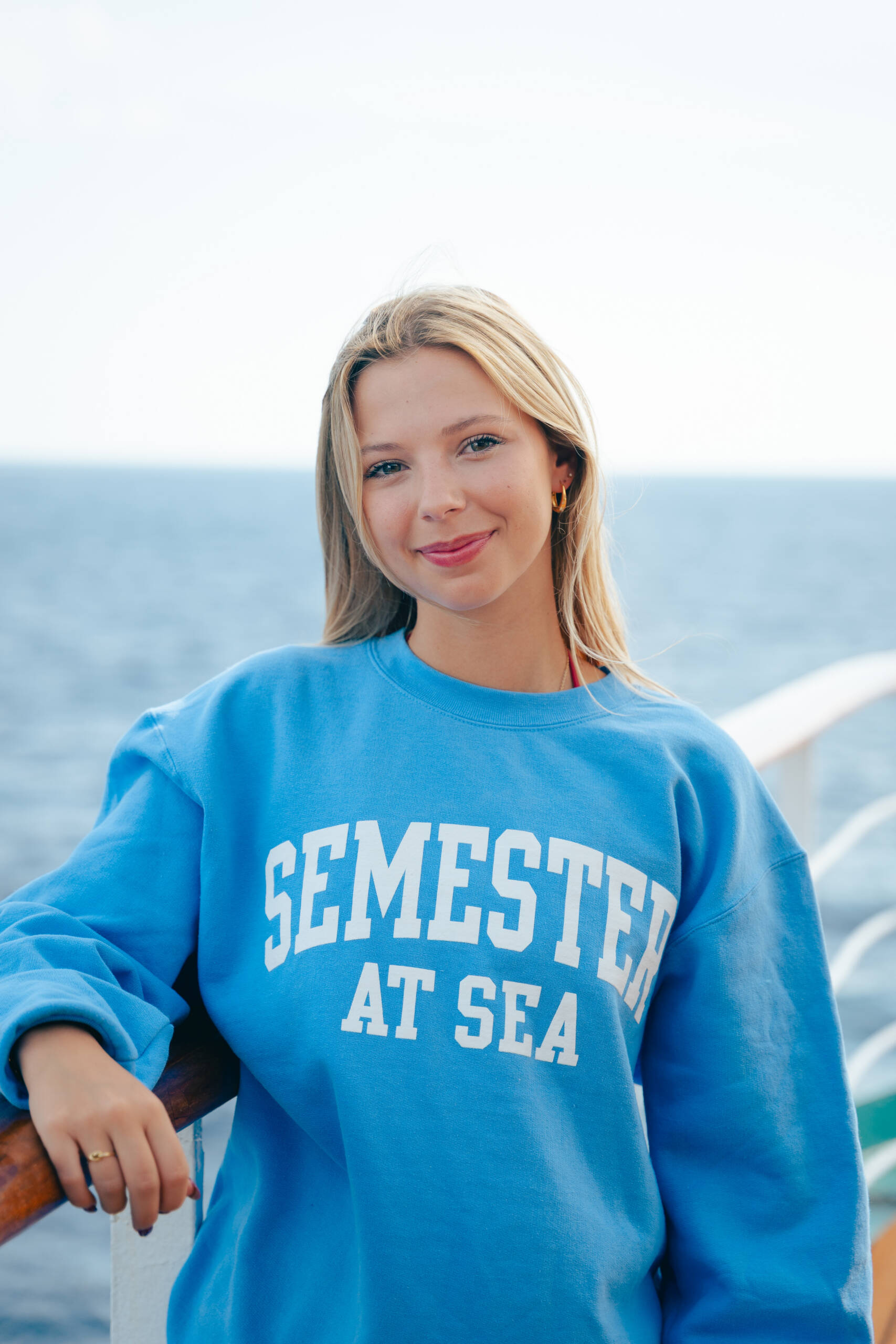
Ines Azoy-Parravano is the Global Journalism Fellow for the Spring 2026 Semester at Sea Voyage. She attends the University of Michigan, Ann Arbor and her writing typically explores topics related to energy equity, climate justice, and global social change.