The Semester at Sea program offers voyagers the opportunity to visit a wide range of exciting and diverse global ports – places many have previously encountered only in books, maps, and conversations. As we celebrate nearly a century of shipboard education, these ports and the time spent in them remain among the most life-changing aspects of the Semester at Sea experience.
And yet, when voyagers are asked to name their favorite place across an entire voyage, one location often rises to the top across generations and classifications alike: the ship itself.
On board, SAS voyagers build community. Innovative classroom discussions take shape. Discoveries and memories from port visits are reflected upon and shared. Voyagers gather for meals with classmates, professors, and ship families. The shipboard community comes together for traditions such as Neptune Day and Sea Olympics while sailing the open seas. Lifelong friendships begin. Life-changing decisions about career paths and personal missions are made.
Across the many ships Semester at Sea has seen over time – each one chosen to better support the program as it has evolved – one idea rings true: while global ports are central to the SAS experience, it is often the ships themselves that become voyagers’ favorite “port.”
A Century of Shipboard Education
One hundred years ago, in 1926, James Edwin Lough, a psychology professor from New York University, imagined a different kind of education. He believed students needed more than lectures and textbooks to learn about the world and their role in it – they needed to encounter the world directly, through travel, observation, and firsthand experience.
That belief became the spark for what would eventually become Semester at Sea.
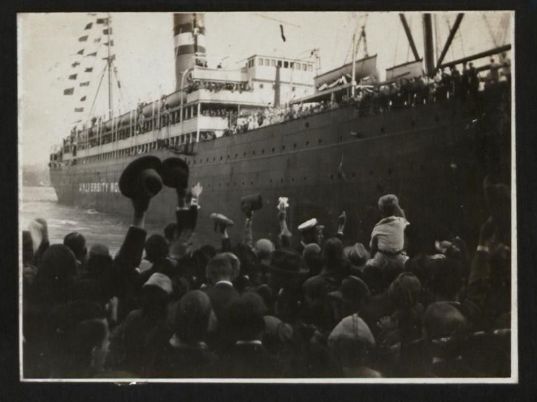
Lough dreamt of a floating university, one that would carry students around the world while they continued their academic studies. With the support of Constantine Raises, a Greek student who helped Lough shape the academic and itinerary plans, Lough worked to bring this idea to life. On September 18, 1926, the SS Ryndam departed Hoboken, New Jersey, carrying 504 students and 63 faculty and staff as the “University World Cruise.” Lough sailed as Dean, and Raises served as Voyage Director. Free from sponsorship by a single institution, the ship provided a home base for students from 143 colleges, 40 states, Canada, Cuba, and Hawaii.
As the ship left Hoboken, Lough made clear that this would not be “a mere sightseeing tour.” It would be a college year shaped by educational travel, international understanding, and the opportunity to think in world terms. Rather, the program was meant to be “educational travel and systematic study to develop an interest in foreign affairs, to train students to think in world terms, and to strengthen international understanding and goodwill.”
Over seven and a half months, the original SS Ryndam, which was built by British shipbuilding company Harland & Wolff and measured 560.7 ft in length, traveled 41,000 miles, visiting 35 countries and more than 90 cities, including Shanghai, Hong Kong, Manila, Bangkok, Colombo, Bombay, Haifa, Venice, Gibraltar, Lisbon, and Oslo. While this voyage was not formally affiliated with the Semester at Sea program as we know it today, it served as an important historical precursor to the concept of shipboard education.
A New Era of Shipboard Education (and Ships)
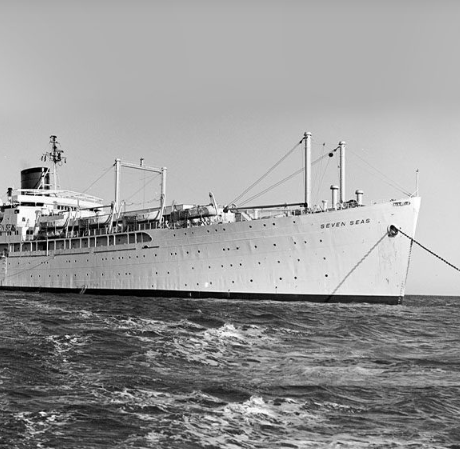
Although that first voyage, which served as a spark for the modern SAS program, was a success, the concept of shipboard education did not fully take hold until the 1960s, when California businessperson Bill Hughes helped revive the idea through the University of the Seven Seas. In 1963, a charter contract was signed with Holland America to create a university aboard the MS Seven Seas. The first voyage of this new era carried 275 students to 22 ports in 16 countries.
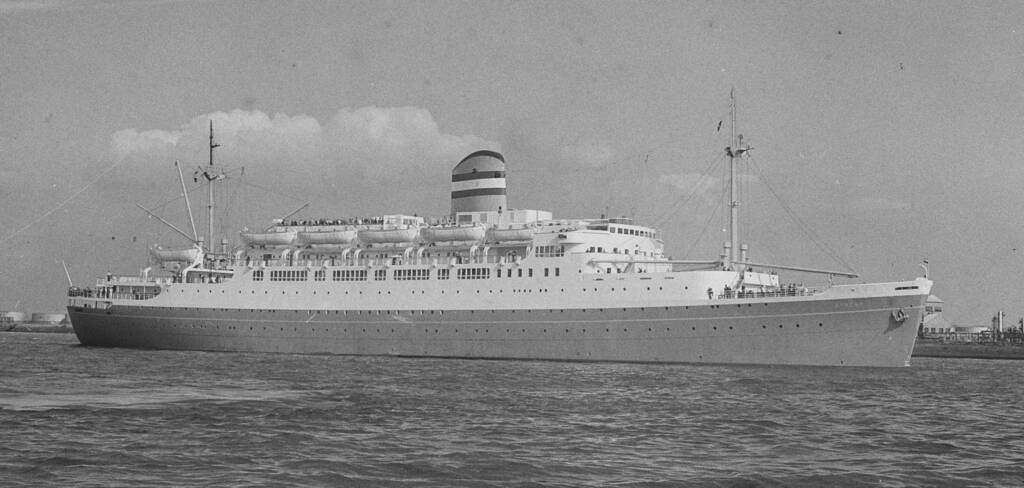
By 1965, the program had affiliated with Chapman College and taken on a new name: World Campus Afloat. Just one year later, Holland America exchanged the Seven Seas for a new SS Ryndam, a name that mirrored the original 1926 vessel and linked the program’s early dream with its growing future. This ship, built by N.V. Dok en Werfmaatschappij Wilton-Fijenoord of the Netherlands, was 503 ft in length.
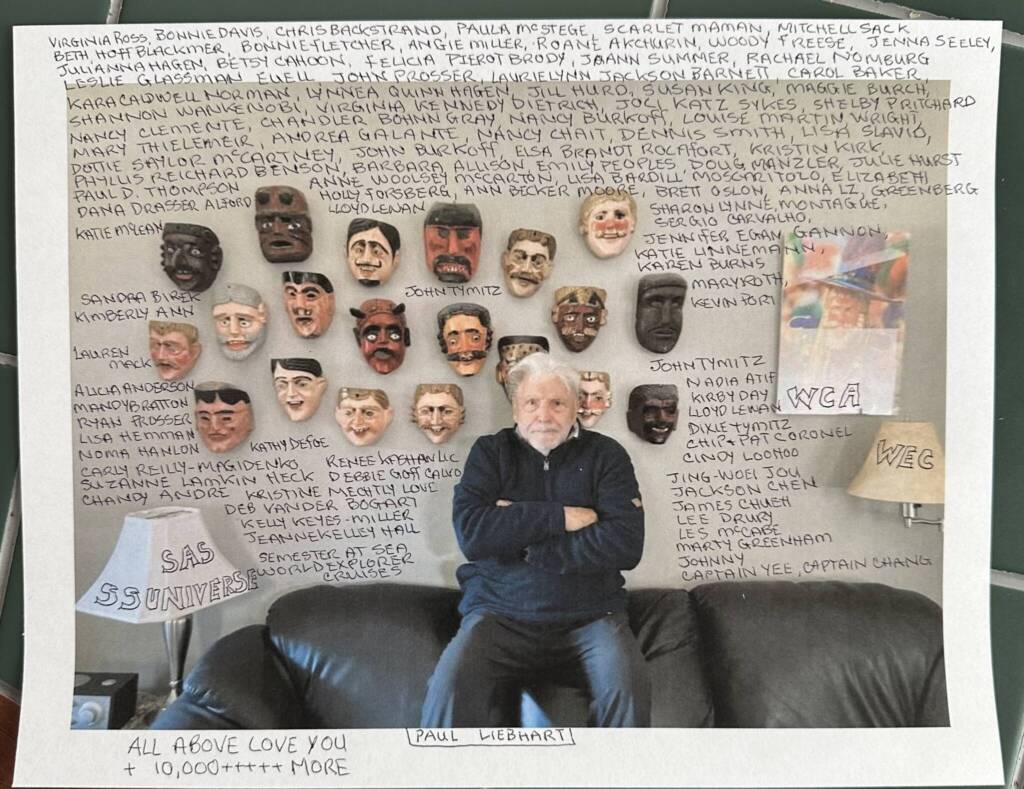
Dr. M.A. Griffiths, a professor of Middle Eastern history at Chapman, was named Dean and Academic Vice President and headed up the World Campus Afloat program. In the late 1960s, Dr. Lloyd Lewan came aboard to serve as Dean on the SS Ryndam ship. This would be the first of many voyages for Dr. Lewan, who became Director of Operations and Associate Dean for the program. Dr. John Tymitz, who would eventually become a CEO for the Institute for Shipboard Education, began his affiliation with the program in this time period.
The ships changed again in the 1970s, a decade that would prove to be defining for the SAS program (then known as the “World Campus Afloat” program). After Holland America withdrew its vessel when it underwent a company reorganization in 1970, C.Y. Tung, a Hong Kong shipping magnate, stepped forward with a vision of his own. Tung imagined a kind of “United Nations” at sea. In collaboration with Dr. Griffiths, Tung first provided the program with the RMS Queen Elizabeth, which was to be renamed the SS Seawise University, and began work to refurbish it for the program. However, while the ship was being renovated in Hong Kong, a fire broke out on board and capsized the ship before it could be used by the program. Despite this major setback, Tung remained committed and soon purchased another ship: the SS Universe.
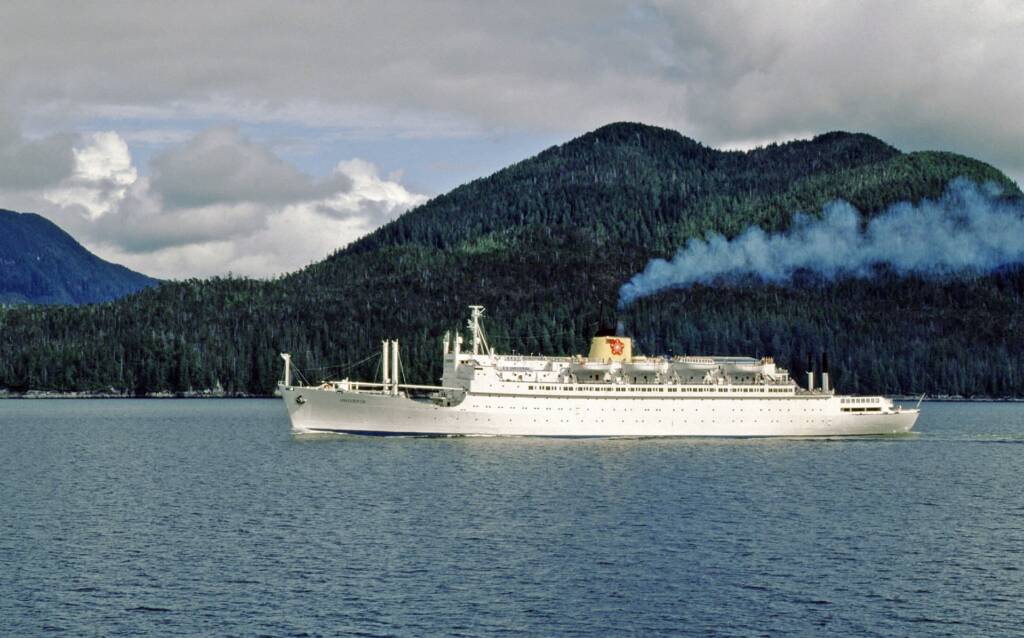
The SS Universe would become one of the most important vessels in SAS’s history. In 1977, after the official founding of the Institute for Shipboard Education as we know it today, and with the University of Colorado-Boulder as a new academic sponsor, the first voyage under the name Semester at Sea launched aboard the SS Universe. At 554 ft in length and with six passenger decks, this ship, built by the Sun Shipbuilding & Dry Dock Company of Chester, Pennsylvania, was the home base for more than 500 voyagers each semester.
In 1981, the University of Pittsburgh took over the sponsorship of the Semester at Sea program – a sponsorship that would persevere for 25 years. Meanwhile, the SS Universe ship carried the program into a new era and became the setting for many historic moments, including visits to mainland China, Egypt, and Vietnam. In 1994, after the U.S. embargo was lifted, the SS Universe became the first ship of U.S. passengers to visit Vietnam.
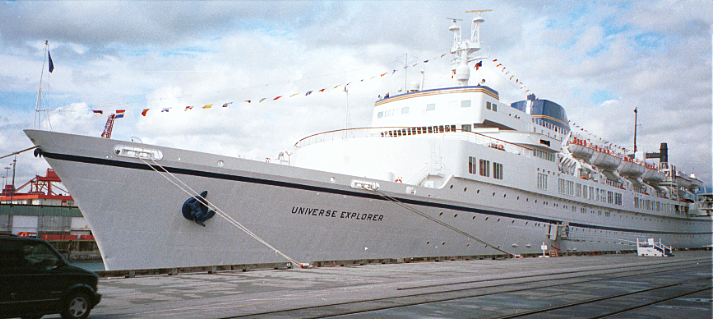
In 1996, the SS Universe Explorer was launched as the new and updated program home base. This ship would remain the main SAS vessel for about a decade. This vessel, built by Ingalls Shipbuilding in Pascagoula, Mississippi, was 574.5 ft in length and could hold up to 557 passengers. In 1999, the SAS program made its first voyage to Havana, Cuba.
While the core ships used by the SAS program have typically been used for many years at a time, we also have had some honorable mention vessels, each used for summer voyages: the MTS Odysseus (2000) and the MS World Renaissance (2001 and 2002) were each utilized for shorter summer voyages near the start of the new millennium.
In 2006, Semester at Sea found a new academic partner at the University of Virginia, and the program continued to evolve with the MV Explorer, purchased by ISE in 2007. During this era, Semester at Sea celebrated its 100th voyage, and the MV Explorer received ISO certification for environmental excellence in 2009. This ship was relatively new when SAS purchased it: built in 2001 in Germany by Blohm + Voss, the MV Explorer measured in at just over 590 ft in length, had 7 decks, and boasted a capacity of 836 passengers.
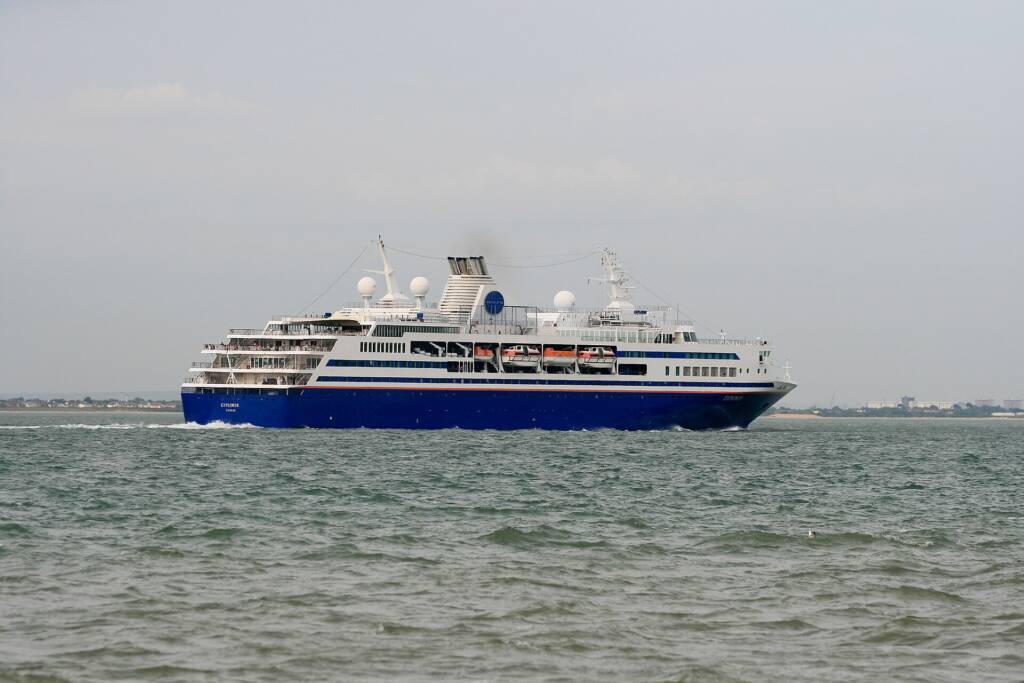
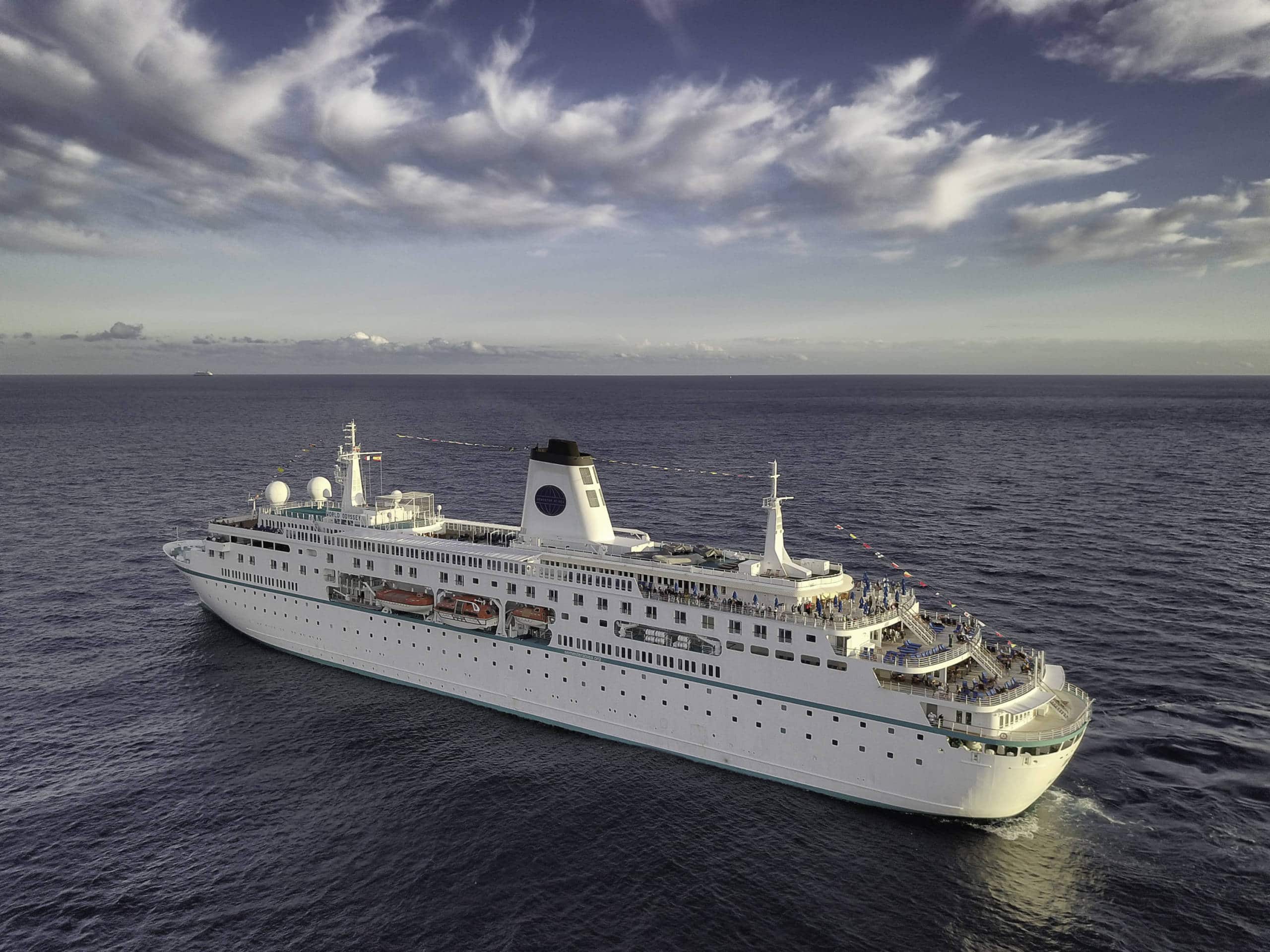
The next chapter of program vessels began in 2015 with the MV World Odyssey, introduced as the sixth traveling campus for Semester at Sea. A short-term lease was signed before the Fall 2015 Voyage, and in 2018, ISE secured an extended lease on the vessel. Built by Howaldtswerke-Deutsche Werft in Kiel, Germany, our current ship is 575 ft in length and features 10 decks (7 of which can be accessed by voyagers). Today, the MV World Odyssey continues the long tradition of the ship as the heart of the Semester at Sea experience.
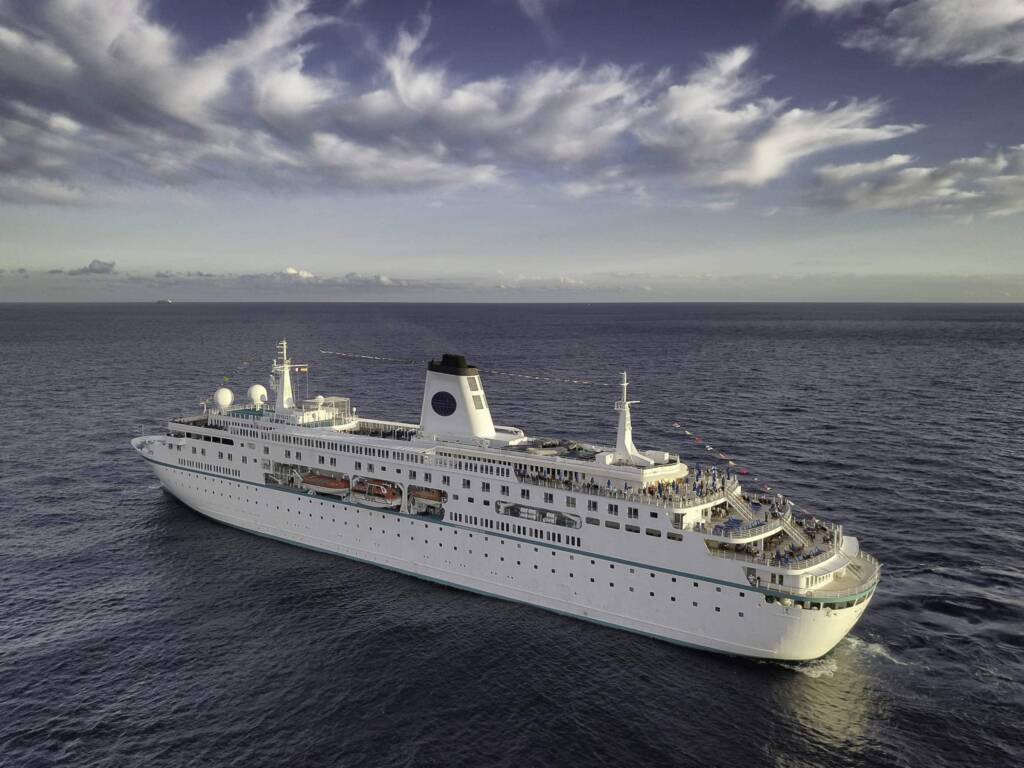
For Dr. John Tymitz, who began working with the early iterations of the Semester at Sea program in the late 1960s and eventually went on to serve as the program’s CEO through his retirement in 2007, one of the most important elements of all of the ships over time has been the people who help make the ship (and the ship experience) run smoothly.
“One of the joys my wife Dixie and I have is to go back to the ship and see the crew. All of those people became integral parts of what we do on Semester at Sea. Many students will tell you that what they remember most was their cabin steward, or the waiter in the dining room, or the person who helped them when they were going on and off the ship. The crew members are all very, very important as far as the success of the program. I tell everybody that they’re magic, in terms of what they did for us, and what they continue to do for us into the future. They’re just very, very special people.” – Dr. John Tymitz
Across nearly 100 years, the concept of shipboard education has evolved, and the major program ships affiliated with versions of the SAS program have changed: MS Seven Seas, SS Ryndam (II), SS Universe, SS Universe Explorer, MV Explorer, and MV World Odyssey. Each ship has reflected a distinct moment in the program’s history, shaped by changing academic partners, global events, visionary leaders, and generations of voyagers eager to learn beyond the boundaries of a traditional campus. And aboard each vessel, our talented and deeply valued crew members – many connected to the program across generations – have worked tirelessly to keep the ships sailing safely, smoothly, and with kindness and care that voyagers remember long after they return home.
Through every evolution of the program, one idea has remained constant: whatever the program has been called, and whatever world events have surrounded it, the ships that have carried SASers have offered a safe, welcoming place to return to after each global adventure. On board, voyagers have built community across differences, made life-changing discoveries, and come to understand themselves more fully, one another, and the world around them.